
Optical Materials
Material selection starts with the spectral band, the required chromatic correction and the system’s operating conditions.
Crystals, optical glasses and amorphous fused silica differ in dispersion, transmission and thermal behaviour. This overview identifies their typical roles in optical systems.
Optical crystals
Calcium fluoride (CaF₂)
Low dispersion and anomalous partial dispersion for chromatic correction. Also used for UV and IR windows. More about CaF₂
Magnesium fluoride (MgF₂)
UV windows and polarisation optics. Crystal orientation affects birefringence.
Barium fluoride (BaF₂)
Broadband windows and lenses from the UV into the IR. Consider humidity and surface durability.
Lithium fluoride (LiF)
Windows for the vacuum UV. Sensitive surfaces require suitable protection from humidity.
Crystalline quartz (SiO₂)
Birefringent crystal for retardation plates and polarisation optics.
Sapphire (Al₂O₃)
Hard, scratch-resistant protective windows, for example in industry. Birefringence can affect imaging.
Silicon (Si)
High-index IR optics. Select the material grade and antireflection coating for the required band.
Germanium (Ge)
IR lenses and windows, especially for thermal imaging. Account for the temperature dependence of refractive index.
Zinc selenide (ZnSe)
Broadband IR optics, including windows and lenses for IR spectroscopy or CO₂ lasers.
Zinc sulphide (ZnS)
IR windows and protective optics. Multispectral grades can also transmit visible light.
Crystran – Optical material data sheets
Calcium Fluoride (CaF₂) in Chromatic Correction
Low dispersion and anomalous partial dispersion give CaF₂ additional degrees of freedom in correcting longitudinal chromatic aberration. Transmission extends from the vacuum UV well into the infrared, depending on purity and thickness. For large precision optics, the specification also covers blank size, homogeneity and thermal design of the mount.
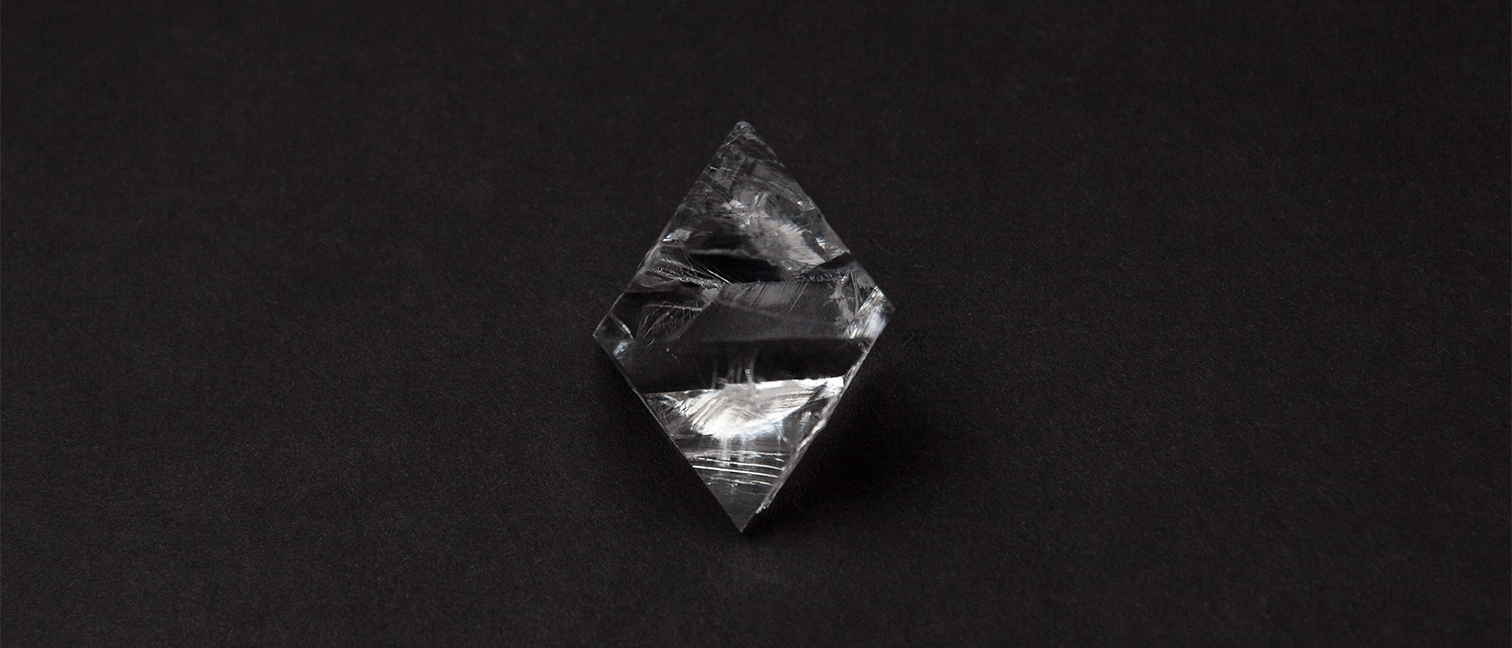
Apochromats · Polychromats · APQ JENA – Calcium Fluoride
Optical Glasses and Fused Silica
Crown, flint and low-dispersion glasses offer different combinations of refractive index and dispersion for correcting colour. Amorphous fused silica (SiO₂) is a separate material. Different grades are available for UV and IR optics. The OH content affects infrared transmission in particular.
- SCHOTT – Optical Glass Pocket Catalog (PDF)
- SCHOTT – Optical Glass and Data Sheets
- SCHOTT – Interactive Abbe Diagram
Selection Criteria
For a particular design, we check transmission at the specified thickness and with the intended coating, refractive index across wavelength and temperature, homogeneity, birefringence where relevant, and available blank size. Together with thermal expansion and mechanical requirements, these determine the suitability of the material and its mount.
Find the definitions of Abbe number, dispersion and fluorite in the DGE Wiki.